


About Publisher
Vision
Ebu Press Ltd (EPL) envisions becoming a globally recognized leader in the dissemination of high-quality, open-access scientific knowledge that drives innovation, collaboration, and progress across disciplines. Since its establishment in 2015, the publisher has aimed to eliminate barriers to accessing research, ensuring that scholars, researchers, and practitioners from all regions—regardless of economic or geographical constraints—can freely access the latest scientific findings. By providing a platform for rigorously peer-reviewed work, EPL seeks to advance science, technology, medicine, and interdisciplinary research worldwide.
At the core of this vision is a commitment to equitable access to knowledge. The publisher recognizes that barriers in scientific communication can limit opportunities for researchers, particularly in emerging regions. By distributing all content under a Creative Commons Attribution 4.0 International License, EPL ensures that research outputs can be freely read, shared, and utilized, promoting knowledge circulation, innovation, and evidence-based progress globally.
EPL aims to create a scholarly ecosystem that combines rigorous research with inclusivity and global reach. The publisher encourages integration across fields such as medical sciences, biological research, biotechnology, food safety, environmental sciences, and public health, enabling interdisciplinary solutions to complex challenges, including public health crises, sustainable development, and environmental conservation.
Another key aspect of the publisher’s vision is the maintenance of the highest standards of academic integrity and transparency. Through stringent peer-review processes, adherence to ethical publishing practices, and compliance with international standards, EPL ensures that the research it publishes is credible, reliable, and reproducible. This approach strengthens the trust of the global scholarly community and attracts contributions from leading researchers worldwide.
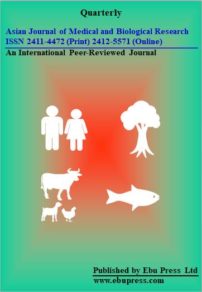
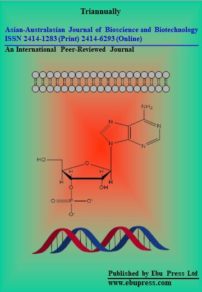
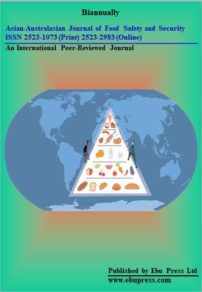
EPL also seeks to enhance the visibility and impact of research from emerging regions, particularly within Asia and Australasia. Through journals such as the Asian Journal of Medical and Biological Research, the Asian-Australasian Journal of Bioscience and Biotechnology, and the Asian-Australasian Journal of Food Safety and Security, the publisher provides a platform for regional research to gain international recognition, promoting knowledge exchange across borders.
EPL envisions contributing meaningfully to the advancement of global knowledge, enabling equitable access to scientific discoveries, and cultivating a worldwide community of scholars united by rigor, integrity, and the pursuit of solutions to pressing societal challenges. By combining open access, ethical publishing, and interdisciplinary research, the publisher seeks to shape the future of scholarly communication, ensuring that research serves the broader interests of humanity.
Mission
The mission of Ebu Press Ltd (EPL) is to advance global scholarship by providing an open-access, peer-reviewed platform that ensures equitable access to high-quality research, encourages interdisciplinary inquiry, and upholds the highest standards of academic integrity. As a non-profit publisher based in Bangladesh, EPL is dedicated to serving the international research community by eliminating barriers to knowledge and enabling innovative and impactful research to reach a wide audience.
Central to the mission is the commitment to open-access publishing under the Creative Commons Attribution 4.0 International License, which allows unrestricted use, distribution, and adaptation of published work while ensuring proper credit to the authors. This approach ensures that students, researchers, policymakers, and practitioners worldwide can access the latest research findings without restrictions, supporting education, innovation, and evidence-based decision-making.
EPL is dedicated to publishing high-quality, peer-reviewed research. Its journals employ rigorous editorial and review processes to ensure that all content meets international standards for scientific rigor, methodological soundness, and ethical compliance. The publisher accepts a wide range of scholarly contributions, including original research articles, comprehensive reviews, case studies, and short communications, thereby providing diverse opportunities for academic expression while maintaining consistency, quality, and reliability.
The publisher also emphasizes interdisciplinary engagement, encouraging research that integrates multiple scientific fields to address complex societal challenges. By bringing together studies in medical and biological sciences, biotechnology, environmental studies, food safety, and public health, EPL promotes innovative solutions that have practical implications for healthcare, sustainable development, and environmental management.
Supporting researchers in emerging regions is another integral component of the mission. By providing a reputable platform for regional scholarship, EPL enables researchers from Asia and Australasia to gain international visibility and recognition. This inclusivity enhances the diversity of perspectives in the global research landscape and ensures that valuable regional contributions reach a wider audience.
EPL is committed to ethical and transparent publishing practices. It adheres strictly to international guidelines, including COPE standards, and implements clear policies for peer review, appeals, and handling of research misconduct. This ensures that all publications are credible, trustworthy, and of lasting scholarly value.
Furthermore, the publisher seeks to accelerate the dissemination of knowledge by ensuring timely publication of manuscripts, promoting scholarly dialogue, and encouraging the practical application of research findings in policy and practice. By doing so, EPL ensures that research outcomes contribute not only to academic progress but also to addressing real-world challenges in health, food security, biotechnology, and environmental sustainability.